Creative Identity After Career Disruption
When the thing you are disappears
I was a working vocalist for most of my life. I performed in amateur music theatre as a child, in professional shows as a teen, and played weekly gigs with my cover band - weddings, parties, clubs, pubs, while touring the fringe circuit with my rock’n’roll cabaret show.
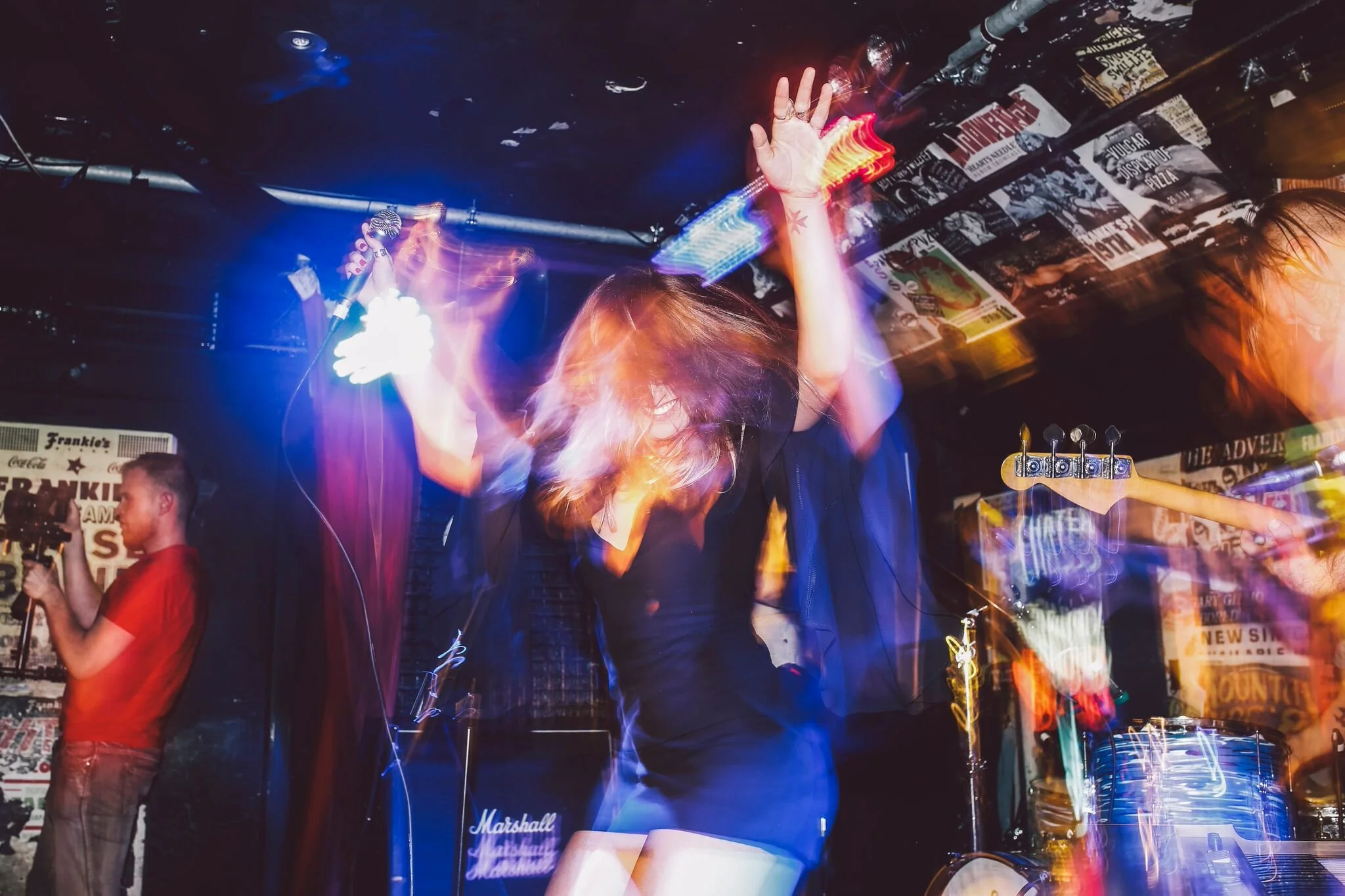
Me and my mates performing at Frankies Pizza around 2014 with our band, Hidden Candy.
My calendar revolved around gigs. My friendships were built in green rooms and rehearsal studios. My money came from stages sticky with beer and bright with light. My sense of self was braided tightly into the music industry. I did not just sing. I was a singer.
Then I ruptured a vocal cord.
This could not be fixed. Not in the way I needed it to be fixed. I could still speak. I could still make sound. But the instrument I had spent years shaping no longer responded to me like it used to.
I remember one of my last gigs. I was standing under hot stage lights, the crowd a blur of movement and expectation. I opened my mouth and felt a slick of cold black dread move through my body. The voice that came out of me did not feel like mine. It did not sound right. It could not do what it used to do. It was thin where it had once been powerful. It cracked where it had once soared.
It was devastating.
But losing my voice was only the first grief.
The next part was the hardest. The in between. The blank space.
When your creative identity is tethered to a specific skill, and that skill disappears, you do not just lose income. You lose orientation. You lose language for who you are. You lose the way you introduce yourself at parties.
Who are you if not that?
Career disruption is not always dramatic. Sometimes it is illness. Burnout. A redundancy. A baby. A breakdown. A market shift. An industry collapse. Sometimes it is simply time.
But when the disruption slices through something you love, it can feel existential.
There is a concept in psychology called identity foreclosure. It is when we commit to an identity early and tightly, without exploring alternatives. Many creatives do this by necessity. We pour hours into honing one craft. We build networks around one industry. We shape our sense of worth around one output.
That commitment can be beautiful. It can also become brittle.
When my singing career ended, creativity itself felt like a betrayal. The one thing I wanted to do most in the world was the one thing I could not do anymore. Writing felt like a consolation prize. Designing felt like cheating on my former self. Even listening to music felt loaded.
This is the strange grief of creative disruption. The thing that once lit you up now reminds you of what you have lost.
The in between can feel like nothingness. Like a grey hallway with no doors. You are no longer who you were, but you are not yet someone else.
Psychologically, this is a liminal state. A threshold. Anthropologists use the word liminality to describe the middle phase of a rite of passage. The old identity has dissolved. The new one has not yet solidified. It is uncomfortable by design. You are meant to feel untethered.
The mistake many of us make is rushing to fill that space.
We scramble for a new title. A new course. A new hustle. A rebrand. We try to prove that we are still productive, still valuable, still relevant.
What I needed instead was time. Space. Room to grow into somebody new.
I needed to let the identity of “singer” loosen its grip without forcing a replacement. I needed to grieve properly. To be angry. To be embarrassed. To feel jealous of people who still had what I had lost. All of it.
Only after that did curiosity start to creep back in.
What else can this body do?
What else can this mind make?
Who am I if my creativity is not confined to one instrument?
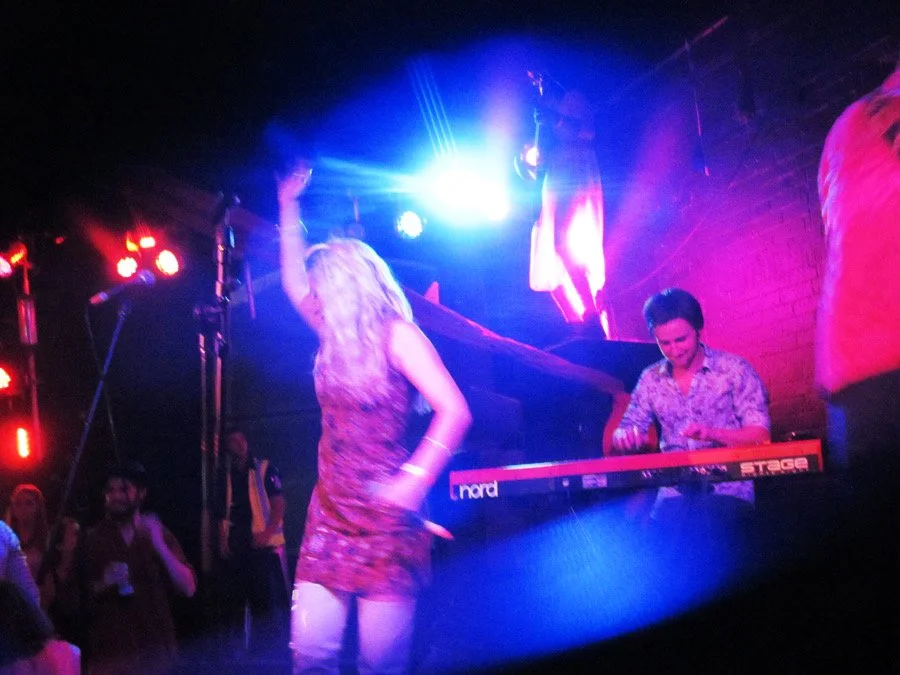
Performing at The Standard Bowl for Mardi Gras ~ 2013
Here is the part I want you to hear if you are in your own disruption.
Your creative identity is not the same thing as your creative output.
Singing was an expression of something in me. It was not the entirety of me. The drive to connect, to interpret emotion, to move people, to stand in front of a room and say something true. Those impulses did not disappear with my vocal cord.
They just needed new forms.
This is the reframe that saved me. Creativity is not a single door. It is a current. It runs under the surface of your life. When one channel is blocked, the water does not evaporate. It looks for another way through.
That does not mean the loss does not matter. It does. Deeply.
But if you give yourself enough space in the in between, you may discover that what you thought was your identity was actually just one costume your deeper self was wearing.
Career disruption can become a brutal but potent invitation. An invitation to expand. To interrogate how tightly you have fused your worth to your output. To ask whether your identity has become so narrow that it cannot flex with life.
I am not grateful for the rupture. I would not romanticise it. But I am changed by it.
It forced me to build a creative life that is more diversified, more psychologically aware, more resilient. It pushed me toward psychology in a deeper way. Toward writing. Toward building Heavy Mental. Toward helping other creatives survive their own plot twists.
Sometimes the creative project is not the album or the show or the exhibition.
Sometimes the creative project is you.
If you are in the grey hallway right now, do not panic at the silence. Do not mistake the absence of output for the absence of identity. Let yourself be undefined for a while. Let grief do its slow, necessary work.
You are not finished. You are in transition.
And the self you are becoming may be larger, braver and more exquisite than the one you lost.