The Honest Guide to Burnout in Creative Professionals
Creative burnout is a strange beast.
It doesn’t always arrive with a dramatic collapse. Sometimes it looks like competence. Productivity. A calendar full of meetings. Deadlines met. Invoices sent. Posts scheduled.
And yet…
Somewhere in the middle of all that output, something vital has gone missing. An absence of a pulsating, curiosity-sparking essence that had (once upon a time) been a core felt feature of the creative work.
If you work in a creative field, you already know this tension. The very thing that once felt expansive and electric can start to feel mechanical. Contracted. Obligatory. You’re still producing, but it no longer feels electric.
Let’s unpack what’s really going on.
——————
Busy, But Not Aligned
One of the most common forms of creative burnout isn’t laziness or lack of discipline. It’s misalignment.
You can be exceptionally busy and deeply depleted at the same time. Pumping out content. Designing. Editing. Strategising. Responding. Always responding.
But when was the last time you created something that felt significant? Something that made you sit back and think, yes, this is mine.
When your output is disconnected from your values, your curiosity or your sense of meaning, the nervous system doesn’t interpret that busyness as fulfilling. It interprets it as chronic demand.
Creative energy thrives on coherence. When your daily work is out of sync with what you care about, it creates a subtle but persistent friction. Over time, that friction becomes overwhelm, cynicism or fatigue.
——————
Creativity Under KPIs
Then there’s the KPI problem.
Creativity is inherently exploratory. It requires play, experimentation, room for mess, room for failure. KPIs, metrics and restrictive feedback loops can squeeze that process into something rigid.
You start pre-empting criticism. Editing yourself before you’ve even begun. Creating to satisfy an algorithm or a client brief rather than your own creative instincts.
External feedback isn’t the enemy. But when it becomes the primary driver, it can erode intrinsic motivation. That internal spark that says I want to make this simply because it matters to me.
The research on motivation is clear. When intrinsic motivation gets crowded out by external pressure, creativity suffers. Not because you’ve lost your talent. Because your psychological needs for autonomy and mastery are being quietly suffocated.
Over time, that suffocation feels like cynicism. Or apathy. Or the nagging thought that maybe you were never that creative to begin with.
You were. You are. You’re just exhausted.
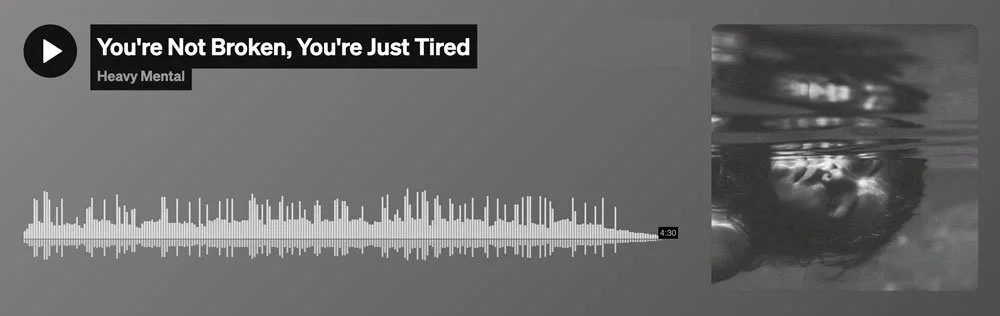
If you’re feeling that exhaustion, check out my guided mindfulness track: You’re Not Broken, You’re Just Tired.
——————
When Life Pressures Wreck the Spark
Creative burnout doesn’t happen in a vacuum.
Parenting. Financial stress. Relationship strain. Health concerns. Administrative load. The invisible labour of adulthood. These pressures accumulate.
The brain doesn’t categorise stress neatly. It doesn’t say, this is work stress and this is home stress. It simply registers cumulative load.
When that load exceeds your capacity to recover, creative drive is often the first casualty. Not because it’s unimportant. But because creativity requires surplus energy.
If you’re operating in survival mode, your system prioritises safety and efficiency. Not curiosity. Not risk. Not artistic exploration.
It’s hard to write poetry when you’re worried about school pick-ups and cash flow.
——————
How Burnout Actually Shows Up
Burnout is not just feeling tired.
Physically, it might look like chronic fatigue that sleep doesn’t fix. Headaches. Muscle tension. Frequent colds. Disrupted sleep. A sense of being wired and tired at the same time.
Psychologically, it can show up as irritability, detachment, brain fog, reduced concentration, self-doubt or a creeping sense of futility. The work you once loved starts to feel pointless. You feel less effective, even if your output hasn’t changed.
Socially, burnout often leads to withdrawal. You cancel plans. You feel less patient with collaborators. Networking feels unbearable. You stop reaching out. Or you go through the motions without any real presence.
There’s also a moral dimension that doesn’t get talked about enough. Creative burnout can feel like betrayal. As if you’ve abandoned the part of you that once cared deeply. That can bring guilt and shame into the mix, which only compounds the exhaustion.
Burnout isn’t a character flaw. It’s a nervous system response to prolonged, unmanaged demand.
——————
The Hidden Grief of Creative Burnout
And underneath all that, there’s often slick and slimey grief sitting amidst creative burnout.
Grief for the version of you who felt inspired. Grief for projects that never saw the light of day. Grief for the belief that creativity would feel more liberating than this.
Naming that grief matters. Because when we don’t name it, we turn it inward as self-criticism.
You’re not lazy. You’re not untalented. You’re not ungrateful.
You’re likely overextended, under-resourced and disconnected from the conditions that allow creativity to flourish.
——————
Okay, Now What?
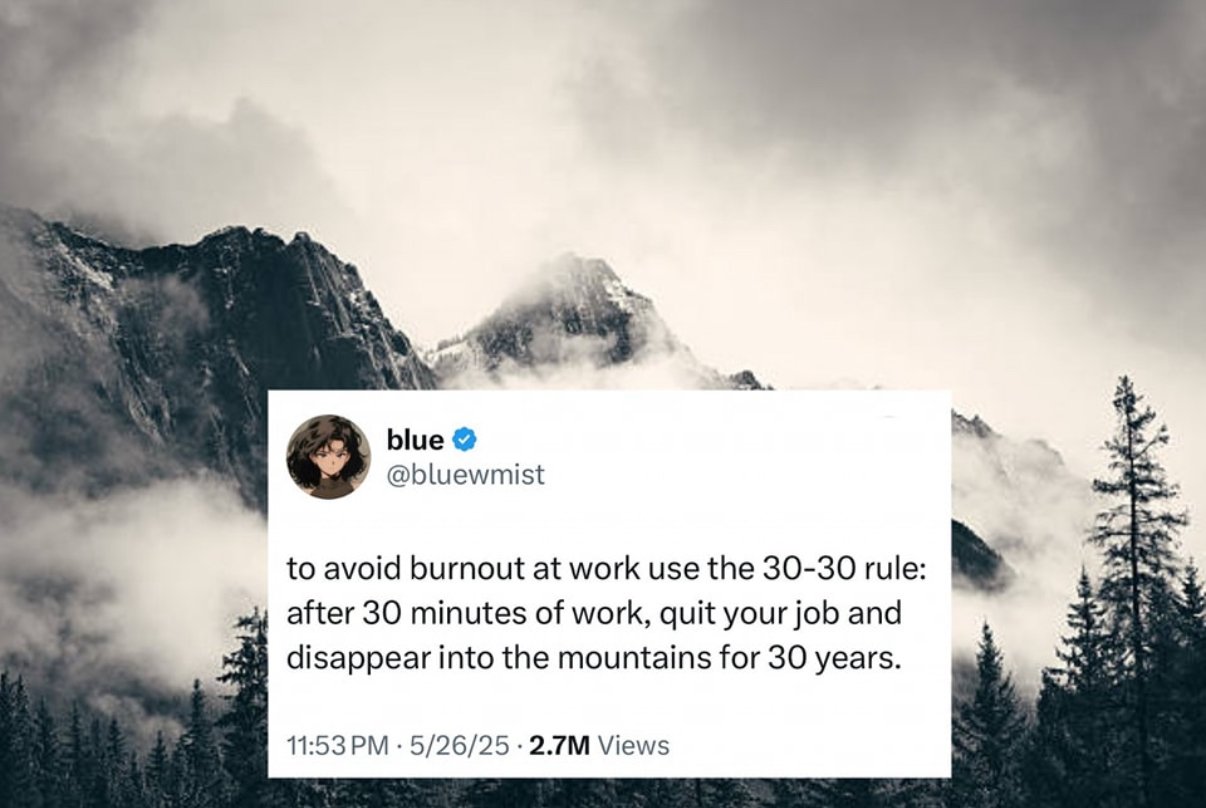
You don’t need a dramatic reinvention. You don’t need to quit your job, go full Walden and move to a cabin in the woods.
Burnout recovery is rarely about blowing up your life. It’s about gently recalibrating it.
That might mean clarifying what aligned work actually looks like for you. Reintroducing small pockets of creative play that are not monetised. Setting firmer boundaries around feedback and availability. Reducing load where possible. Increasing recovery deliberately.
It starts with awareness. With taking an honest look at where the friction is coming from and how it’s manifesting in your body and behaviour (my Anti-Burnout Breath Sesh is a cool little track for guiding some of this awareness).
If you’re not sure where to begin, I’ve created a gentle starting point.
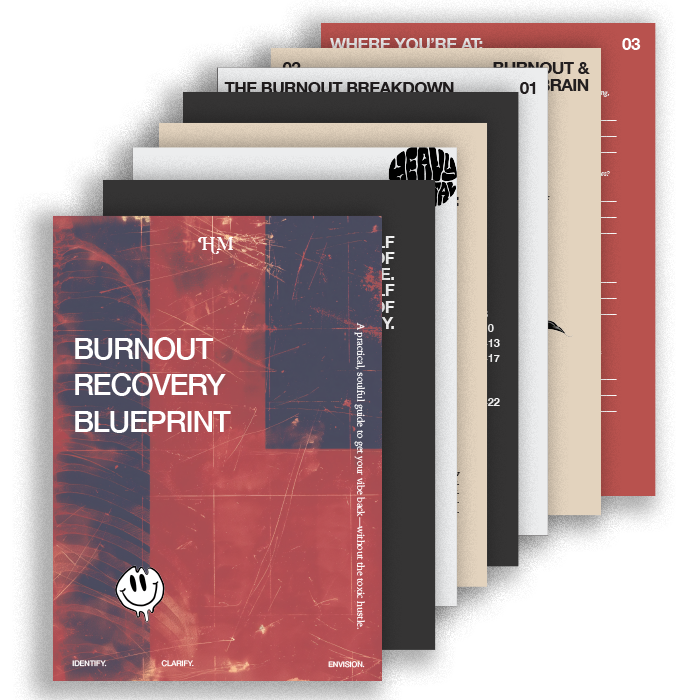
The Burnout Recovery Blueprint is a practical, compassionate guide designed specifically for creative professionals. It walks you through identifying your unique burnout patterns, understanding your nervous system, and building a recovery plan that feels realistic rather than aspirational.
No hustle. No toxic positivity. Just a structured way to move from depletion to steadiness.
Because creativity was never meant to be fuelled by chronic stress.
It thrives when you do.